
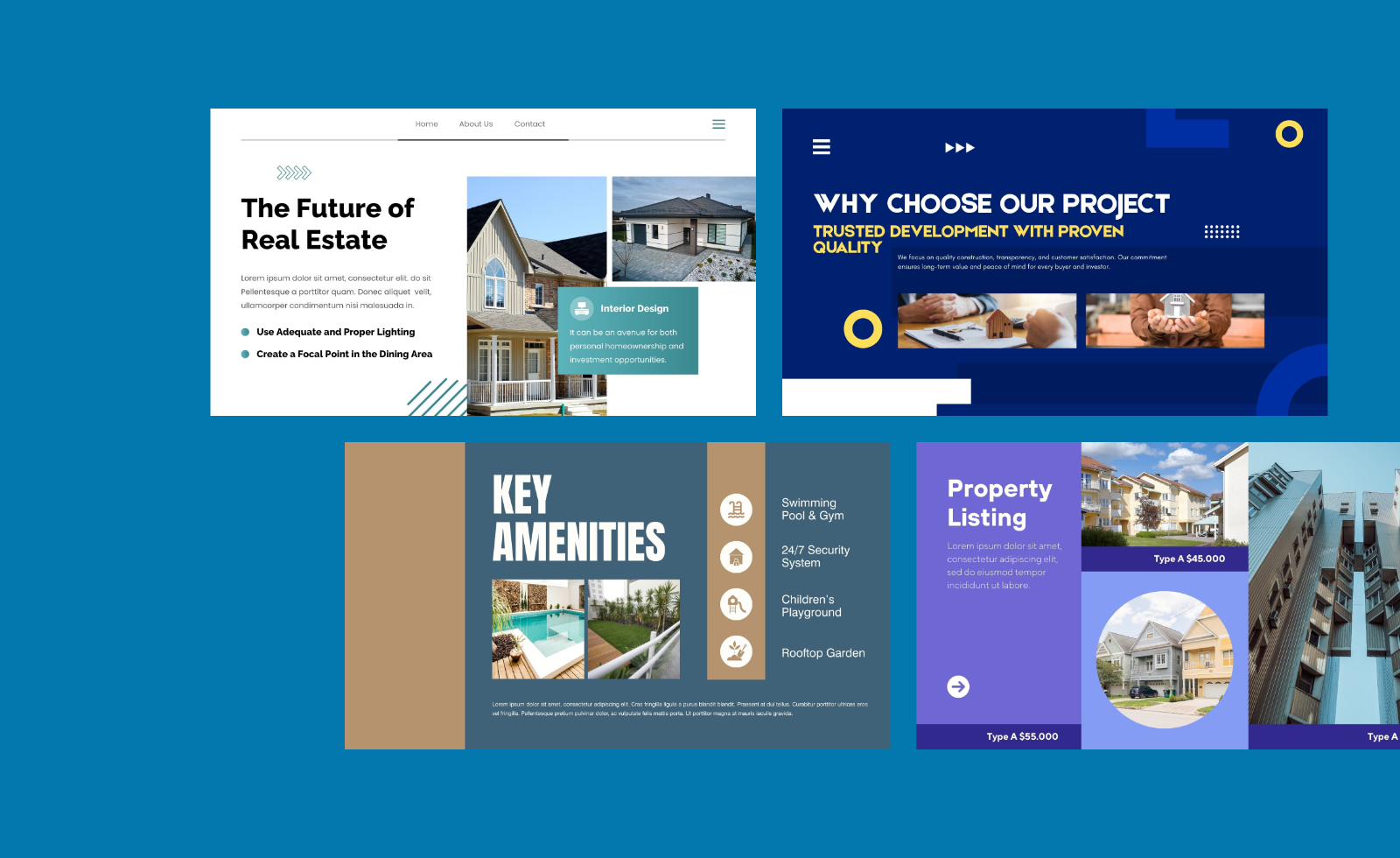
Why Your Brand Looks Different on Every Slide Deck (And How to Fix It at Scale)
Picture this. Sarah is a regional marketing manager at a financial services firm with offices in Dubai, Riyadh, and Cairo. She has been asked to present the company’s Q1 results to a group of senior stakeholders next week. She opens PowerPoint, grabs the last deck someone sent her, updates the numbers, changes a few headlines, and sends it off.
On the same day, her colleague in Cairo is building a client pitch. He is working from a different template he downloaded from the shared drive three months ago. The logo is slightly stretched. The font is close, but not quite right. The colour on the headline is off by a shade.
Neither of them is doing anything wrong. They are both trying to do their jobs quickly and professionally. But when the two presentations land in a client’s inbox on the same day, the company looks like two different organisations.
This is the brand consistency problem. And it is not a people problem. It is an infrastructure problem.
The Scale of the Problem
Canva’s 2026 State of Visual Communication Report found that the average company uses 8.7 different visual communication tools. In some markets, that number climbs closer to 12. When your team is designing across PowerPoint, Canva, Google Slides, Figma, Adobe Express, and a handful of others, your brand does not stand a chance at consistency.
The result is what designers call brand drift. It happens slowly, invisibly, and at scale. No single person is responsible. The system is.
For enterprise marketing leaders, this creates a specific kind of frustration: you know the guidelines exist. You may have even written them. But every time you open a deck built by someone outside the brand team, something is slightly wrong. A logo placed in the wrong corner. A secondary colour is used where the primary should be. A font that is close, but not the right one.
The research is clear: design-led companies report


The gap between them and text-first, tool-fragmented organisations is measurable, not subjective.
Why Brand Guidelines Alone Will Never Solve This
The instinctive response to brand inconsistency is to update the brand guidelines. Write a clearer document. Run another workshop. Send another reminder email.
None of it works at scale. Here is why.
Brand guidelines live in a static document. Work happens in a live design tool. Those two things almost never talk to each other. When the right choice requires opening a PDF, finding the correct hex code, downloading the right logo variant, and applying it manually to a template you are building from scratch, people will skip steps. Not because they do not care about the brand. Because the friction is real and the deadline is closer.
The organisations that have genuinely solved brand consistency at scale did not do it by writing better guidelines. They did it by building infrastructure where the right choice is the default choice. Where the correct logo, colour, and font are already loaded and waiting. Where templates are pre-built, pre-approved, and pre-locked to prevent deviation.
That is a fundamentally different approach. And it changes everything.
What Infrastructure-Led Brand Consistency Looks Like
The Property Franchise Group operates across 700 offices under multiple franchise brands in the UK. Before they rebuilt their creative infrastructure, getting a simple design asset could take up to two weeks. Brand consistency across 700 locations was aspirational at best.
After implementing Canva Enterprise with a centralised Brand Kit, their Head of Digital Marketing described the change simply: “Before and after Canva, it was night and day.” Their entire brand identity now lives in one platform. Templates are locked where they need to be locked. And the organisation has saved a projected £16.8 million in design resources.
That is not a marginal improvement. That is what happens when you stop treating brand consistency as a communication problem and start treating it as an infrastructure problem.
The three pillars of infrastructure-led brand consistency
- A centralised Brand Kit. Every approved logo, colour, font, and design element stored in one place. Not in a shared drive. Not in a PDF. In the platform where work actually happens.
- Locked templates. Pre-built designs for your most-used content formats, where brand elements are protected and only content fields are editable. Your team gets creative freedom. You keep control.
- Platform governance. Admin controls that determine who can publish, who needs approval, and who manages the Brand Kit. Governance built into the workflow, not bolted onto it afterwards.
How to Audit Your Current Brand Consistency Problem
Before you can fix the problem, you need to understand its scope. Here is a simple audit you can run this week.
- Collect five pieces of content created by different people or teams in the last 30 days. A slide deck, a social post, a client proposal, an internal report, an event banner.
- Check each one against your brand guidelines: logo placement, colours, typography, imagery style.
- Count the deviations. Not to blame anyone, but to understand where the gaps are largest.
- Ask yourself honestly: was the correct brand asset easy to find and apply for each piece? If the answer is no, that is your infrastructure gap.
Most marketing leaders who run this audit discover that the problem is bigger than they expected. The inconsistencies are not rare exceptions. They are the norm.
The good news: This is a solvable problem.

Not through effort and communication, but through the right platform infrastructure.
Getting the Fix Right: What to Look for in a Solution
Not all design platforms are built for enterprise brand governance. When evaluating a solution, look for these four capabilities.
- Brand Kit functionality. Can you centralise all brand assets in the platform and have them automatically applied to new designs?
- Template locking. Can you control which elements of a template can be changed and which cannot?
- User permissions. Can you set different access levels for different teams, regions, or content types?
- Approval workflows. Can designs be submitted for review before publishing, without leaving the platform?
Canva Enterprise is built around all four. And when implemented properly, it does something that no brand guidelines document has ever managed to do: it makes the on-brand choice the easiest choice, every time, for every team member, regardless of their design experience.
That is the standard to hold your infrastructure to.
A Note on Adoption
The biggest risk with any new platform implementation is adoption. You can build the best Brand Kit in the world, and if people do not use it, the problem persists.
The organisations that get adoption right treat it as a change management challenge, not a technical one. They invest in training. They build templates that are genuinely useful for the teams who will use them. They make the new system easier than the old one, not just theoretically better.
Engel and Volkers, the luxury real estate network, launched Canva Enterprise with 500 on-brand templates on day one. Within one week, 1,700 advisors were actively using the platform. That is not a coincidence. That is what happens when the new system is so clearly better than the alternative that adoption is the path of least resistance.
The lesson: do not just implement the technology. Build the template library that makes people want to use it.
The Bottom Line
Brand consistency at enterprise scale is not a creative challenge. It is an operational one. The organisations solving it are not the ones with the most talented designers or the most detailed guidelines. They are the ones that built the right infrastructure and got their teams to use it.
If every slide deck in your organisation looked like it came from the same company, what would that be worth? That is the question worth answering.


